Fresh Orange Juice vs Packaged Drinks: Sugar and Calories
An honest comparison of fresh orange juice with canned and bottled soft drinks: calories, sugar and vitamin C per 100 ml, and how to read the label.
Fresh orange juice is often described as a "healthier" alternative to canned and bottled drinks. Is it? The honest answer is more interesting than a slogan: in some ways yes, in others it is about the same. Here is the comparison, with numbers.
Calories: about the same per ml
Per 100 ml, the USDA's FoodData Central lists raw orange juice at about 45 kcal and a regular sweetened cola at about 41 kcal.
So fresh orange juice is not a low-calorie drink, and we would rather say so than pretend. If calories are your only concern, water, plain soda water or a diet drink will always have fewer. The case for fresh juice is not that it is light. It is what comes with the calories.
Sugar: natural versus added
| Per 100 ml (reference values) | Fresh orange juice | Regular cola |
|---|---|---|
| Energy | about 45 kcal | about 41 kcal |
| Sugars | about 8.4 g | about 10.4 g |
| Where the sugar comes from | the oranges | added |
| Vitamin C | about 50 mg | none |
| Potassium | about 200 mg | very little |
Source: USDA FoodData Central, general reference values. Packaged products vary, so always read the label on the one you are holding.
The WHO counts sugars in juice as "free sugars" along with added sugar, so a glass of juice is not a licence to drink freely. But the sugar in fresh juice comes with vitamin C, potassium and folate. The sugar in a soft drink comes with nothing. Our article on what no added sugar really means goes deeper.
What about packaged "juice" drinks?
This is where labels matter most, because products that look similar can be very different:
- 100% juice is a different product from a "juice drink", "nectar" or "fruit beverage", which can have a much smaller share of fruit.
- From concentrate means water was removed from the juice and added back later.
- Added sugar, preservatives and acidity regulators show up in the ingredient list, not in the headline.
- The fruit content is stated as a percentage. Look for it.
None of this makes every packaged juice bad. It means you can only know what you are drinking by reading the label.
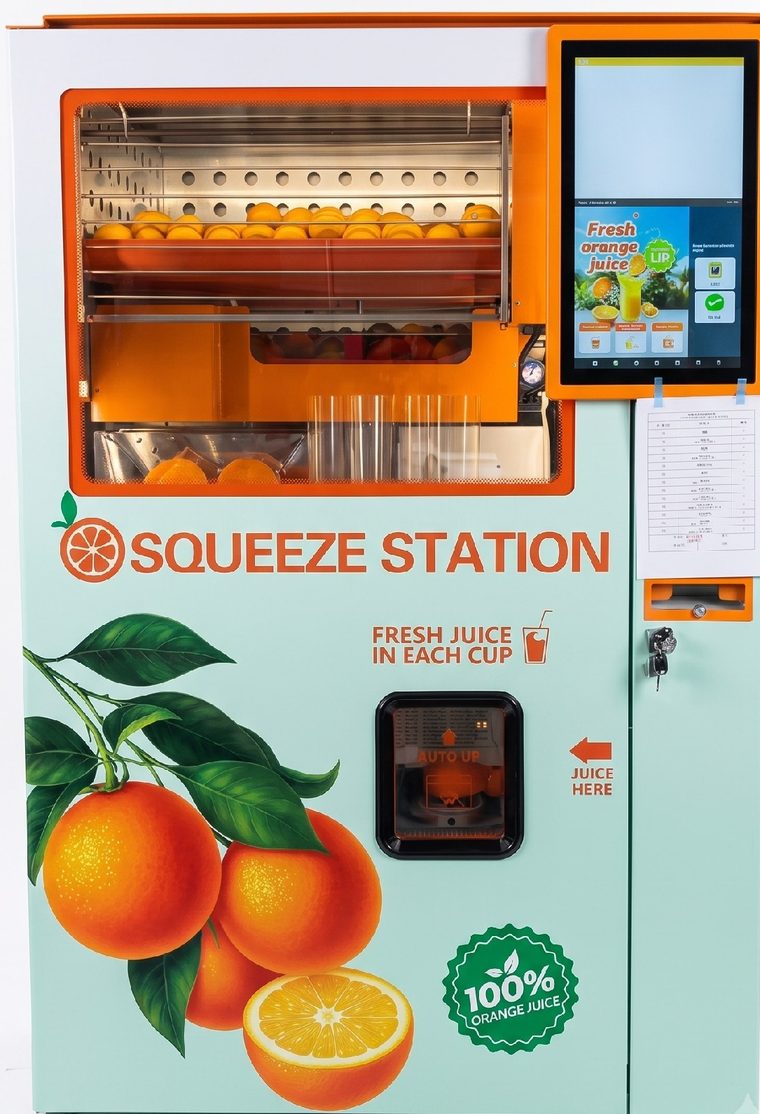
What a Squeeze Station glass is
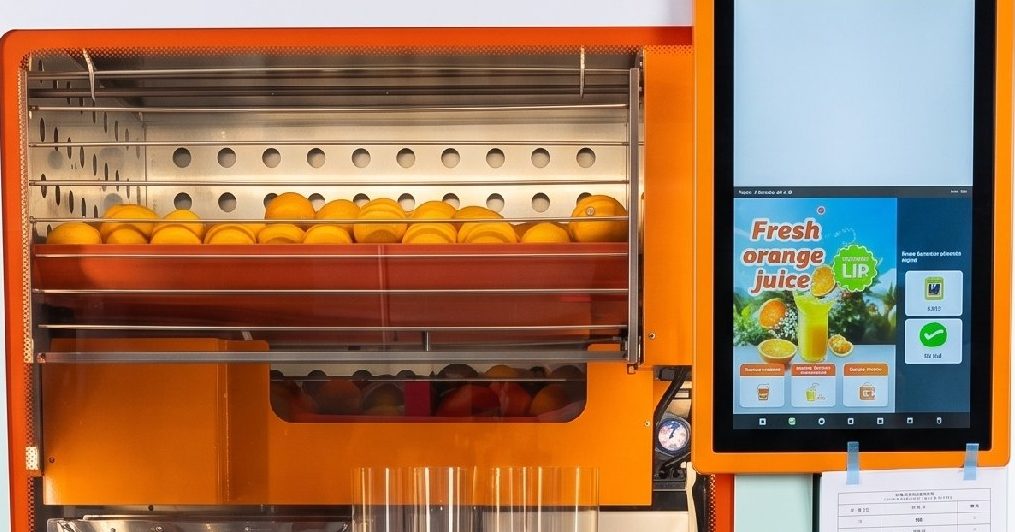
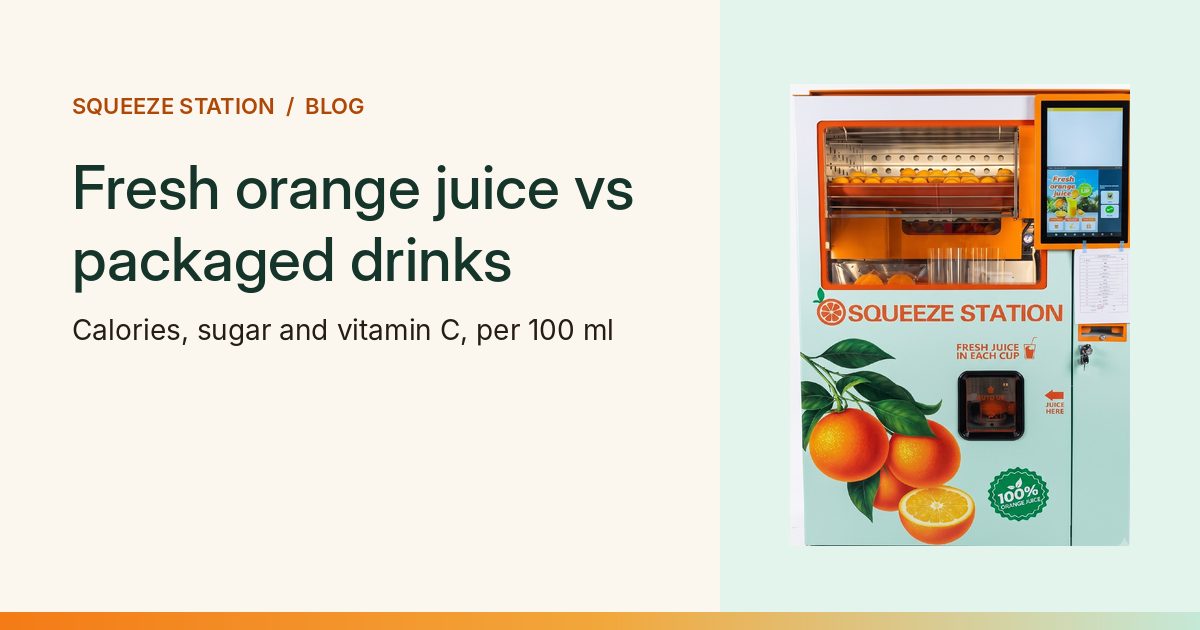
The machine squeezes 2-3 whole oranges when you order. There is no concentrate, nothing is stored as juice, and nothing is added: no sugar, no water, no preservatives. It comes in a heat-sealed, tamper-evident cup in about 40 seconds. See how it works.
So which should you pick?
- For hydration with no calories, pick water.
- For something sweet that also gives you vitamin C and potassium, a glass of fresh orange juice is a better trade than a sugary soft drink, in moderation.
- For a fully sugar-free fizzy drink, a diet soda is lighter but offers no nutrients.
If you have diabetes, kidney problems or another condition that affects your diet, ask your doctor or dietitian. This article is general information, not medical advice.