How a Fresh Orange Juice Vending Machine Works
A Squeeze Station machine squeezes 2-3 whole oranges into a sealed cup in about 40 seconds. Here is how it works, how it stays clean, and what a glass costs.
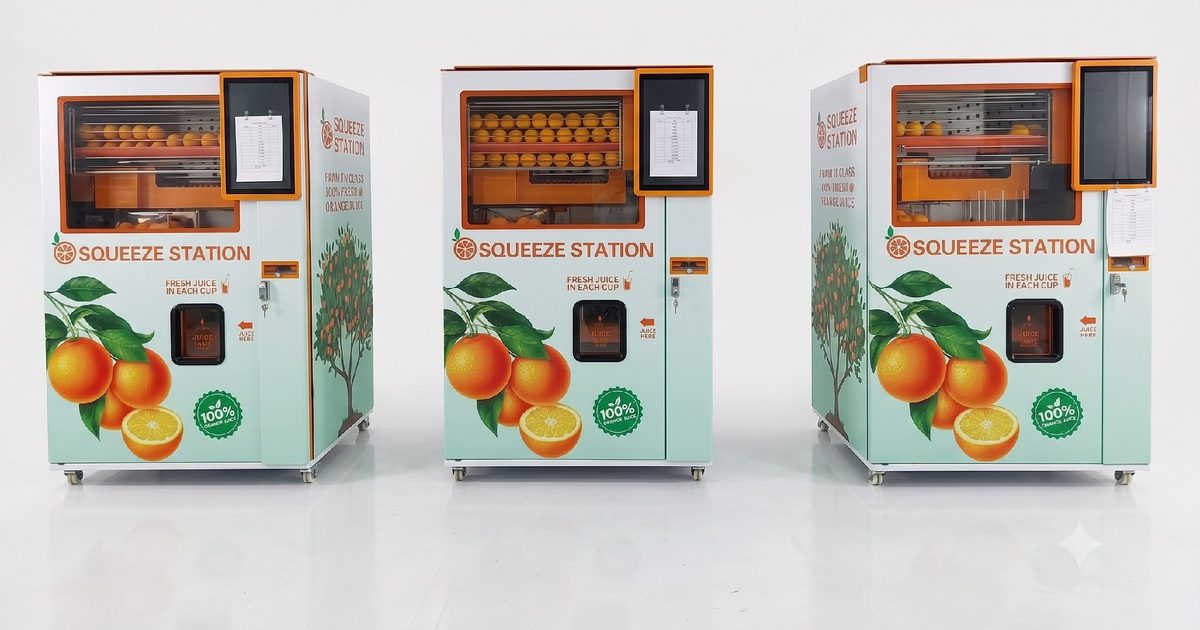
Much of the orange juice sold in bottles and cartons is squeezed well in advance, stored, and packed long before you buy it. A fresh orange juice vending machine does something simpler: it holds whole oranges and squeezes them after you order, so the juice in your cup was an orange less than a minute earlier.
That is the idea behind Squeeze Station, a brand of Autoserve Vending Machines Private Limited. This article explains what happens inside the machine, why that matters for the glass you drink, and what it costs.
What happens from tap to cup
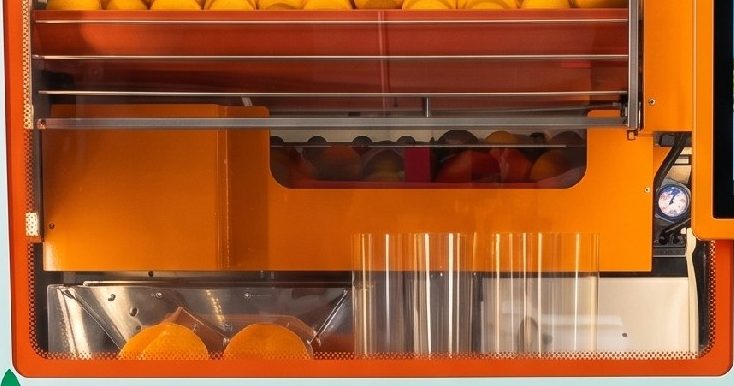
- The oranges arrive washed. They are washed at our own facility before they reach a site, then loaded into the machine's refrigerated magazine, which holds roughly 500 oranges (about 180-200 glasses) at an adjustable 4-20 degrees Celsius.
- You order and pay. You choose on the 22-inch touchscreen and pay by scanning the UPI QR code. There is no cash or card to handle, and your GST invoice is sent to you on WhatsApp.
- The machine squeezes. It picks 2-3 whole oranges for your glass and presses them through double juicer heads. Nobody touches the fruit at any point.
- The cup is sealed. The juice goes into a cup that is heat-sealed and tamper-evident, ready in about 40 seconds.
Why squeezed-to-order is different
Nothing in the machine is a ready-made juice. There is no tank of juice sitting at the back, no concentrate to mix, and nothing added: no sugar, no water and no preservatives. The only ingredient is the oranges.
That matters for two reasons. First, taste: freshly squeezed juice smells and tastes brighter than juice that has been stored. Second, nutrition: vitamin C slowly breaks down when juice is exposed to air, light and time, so juice that is made at the moment you drink it has had the least chance to lose it. We explain the numbers in our article on vitamin C in fresh orange juice.
How it stays clean
A machine that nobody staffs has to be clean by design, so the hygiene steps are built in:
- Oranges are washed before they are loaded, so nothing unwashed enters the juicing chamber.
- The juicing mechanism runs an automatic cleaning cycle every 6 hours, around the clock.
- The oranges stay refrigerated until the moment they are squeezed.
- There is zero human contact from the whole orange to the sealed cup.
- The operation runs under an FSSAI licence (No. 21226009003140).
Open when you are
The machines run 24 hours a day, 7 days a week, because there is no counter to staff. That suits places that never really close, like hospitals, or people who finish work late. Machines are monitored remotely, and our team handles daily refills and preventive maintenance.
What a glass costs
A glass is priced between Rs 100 and Rs 150 depending on the location. That reflects what is in it: 2-3 whole oranges, squeezed and sealed on the spot. For a closer look at how it compares with packaged drinks, read fresh orange juice vs packaged drinks.
Where to find one
Squeeze Station machines are running at KIMS Hospitals, Mahadevapura and DivyaSree 77 Town Centre in Bengaluru. See all of them on the locations page. If your hospital, office, mall or co-working space could use one, read why hospitals, offices and malls are adding fresh juice machines.