No Added Sugar Orange Juice: What It Really Means
Fresh orange juice has no added sugar, but it is not sugar-free. See how much natural sugar is in a glass, what the WHO says, and how to read labels.
"No sugar" is one of the most used phrases on a drinks label, and one of the least precise. For fresh orange juice the accurate wording is no added sugar. This article explains the difference, because it affects what you choose to drink.
No added sugar is not sugar-free
Oranges are sweet because they contain sugar: mostly sucrose, glucose and fructose. When you squeeze oranges, those sugars come into the cup. The USDA's FoodData Central lists raw orange juice at about 8.4 g of sugar per 100 ml, so a 200 ml glass has roughly 17 g.
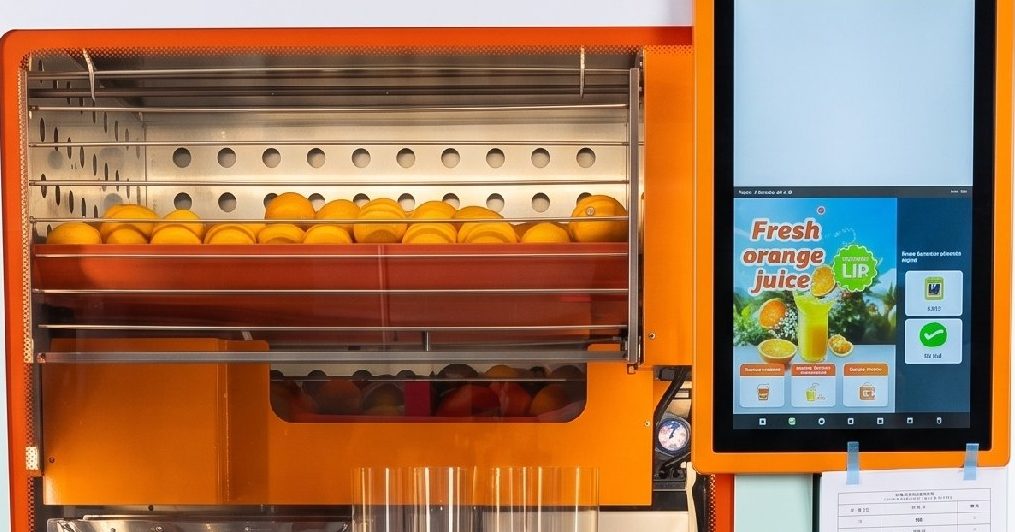
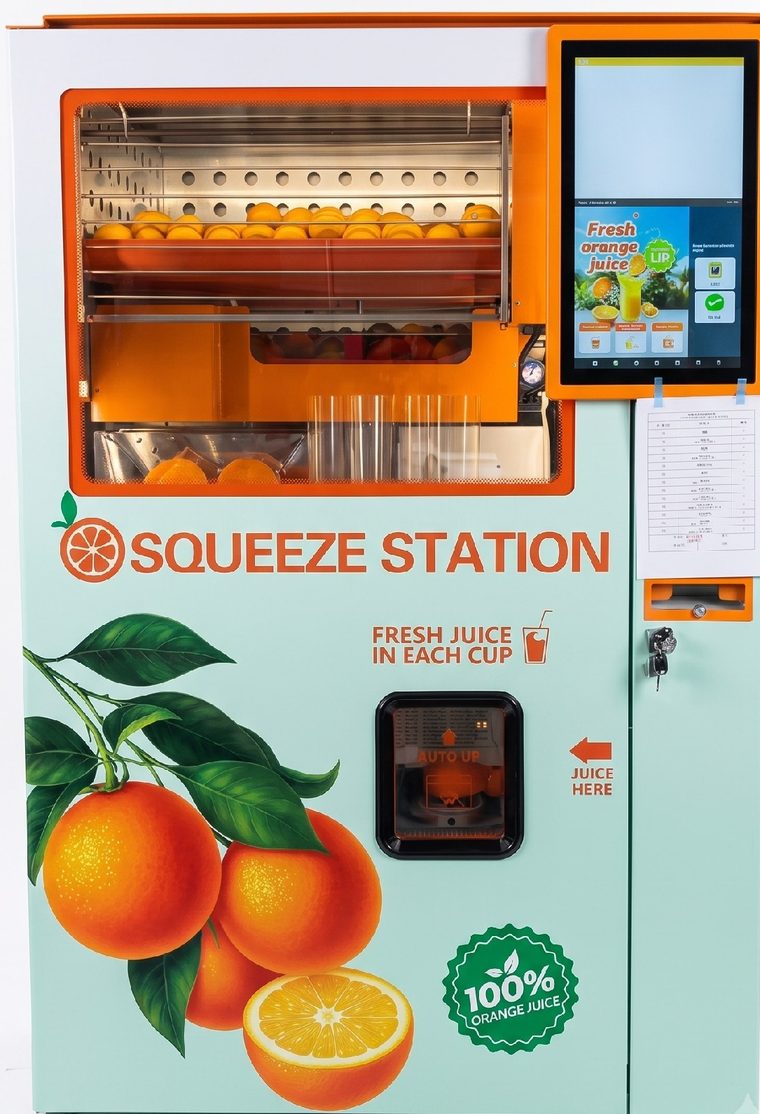
What a Squeeze Station glass does not contain is any sugar that someone added. The machine squeezes 2-3 whole oranges and nothing else goes in: no sugar, no syrup, no water and no preservatives.
What the WHO says about juice
The World Health Organization counts the sugars in fruit juice as "free sugars", the same group as table sugar and honey, because juice has lost much of the fibre that slows down whole fruit. Its guideline is to keep free sugars under 10% of daily energy, and ideally under 5%. On a 2,000 kcal diet that is under about 50 g, ideally under 25 g.
By that yardstick, one 200 ml glass of orange juice is a meaningful part of your day's allowance, not a free pass. It is better than a drink with sugar added on top, because the juice also brings vitamin C, potassium and folate, but it is still a drink to enjoy, not to drink all day.
How to read a juice label
Packaged drinks that look like juice can be very different. Check the label for:
- Added sugar, sugars or syrups in the ingredient list.
- "Juice drink", "nectar" or "fruit beverage", which can contain a lower share of actual fruit than a pure juice.
- "Reconstituted from concentrate", meaning water was removed and later put back.
- Preservatives and acidity regulators.
- The fruit content, which is stated as a percentage.
Our article comparing fresh orange juice with packaged drinks goes through the numbers side by side.
Getting the most from a glass
- Have it with or after a meal, or as a mid-morning or afternoon pick-me-up, rather than sipping it for hours.
- Treat it as a fruit serving you drink. A whole orange has fibre, and juice has much less.
- Keep drinking water. Juice is not a replacement for it.
- If you are managing diabetes or watching your blood sugar, ask your doctor or dietitian whether and how much orange juice suits you.
Why we say it plainly
A fresh orange juice vending machine does not need to hide behind "sugar-free". The honest pitch is simpler: real oranges, squeezed when you order, with nothing added. The sweetness comes from the fruit, which we explain in why fresh orange juice tastes naturally sweet.
This article is general information, not medical advice.